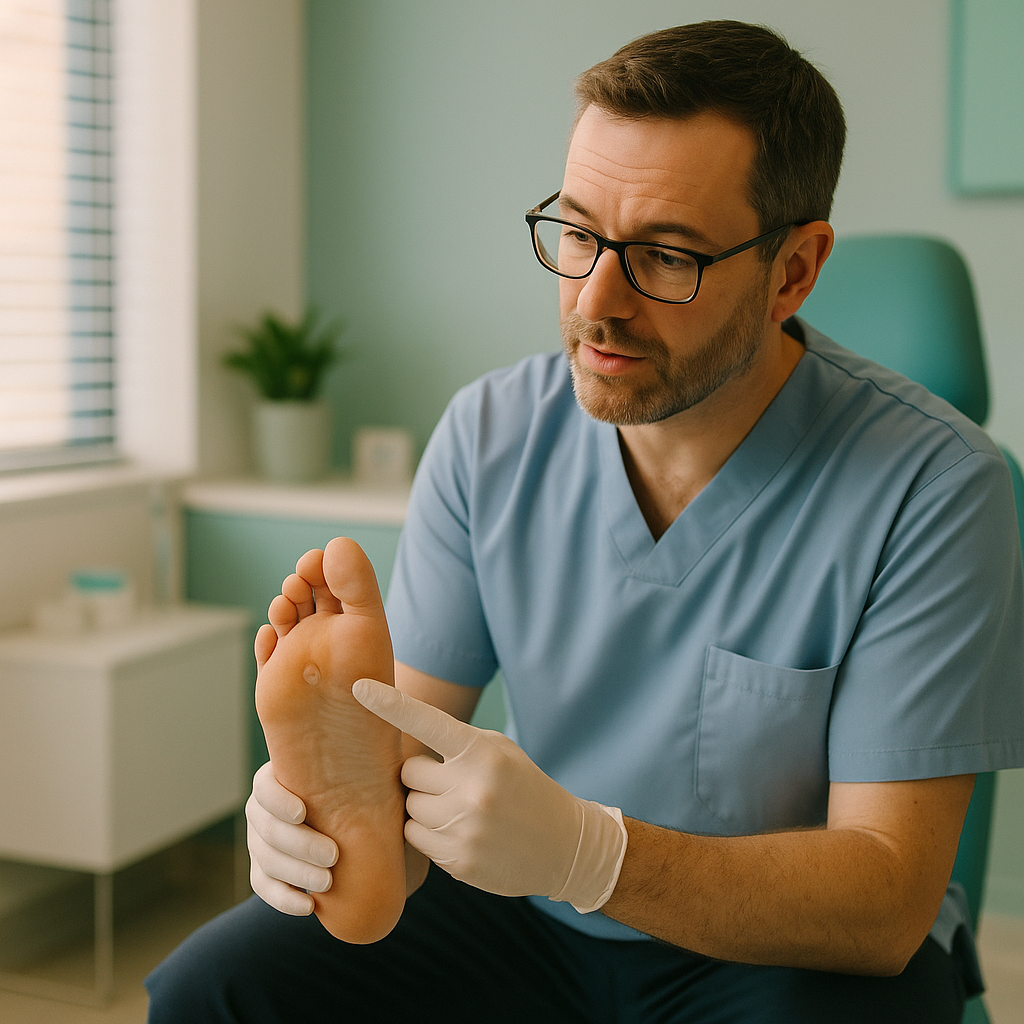
Have you ever experienced sharp, localised pain on your foot, only to discover a small, hardened spot?That painful bump could be a corn—a common yet uncomfortable foot problem that affects many people. Corns can make every step a painful chore, but with the right care, they can be managed effectively.
Here’s everything you need to know about corns, their causes, treatments, and how to prevent them from coming back.
What Are Corns and Why Are They So Painful?
Corns are areas of thickened skin that typically form in response to high, localised pressure on a particular spot of the foot. This pressure could be caused by ill-fitting shoes, high heels, or even just the natural way you walk. The skin thickens in an attempt to protect itself from irritation, resulting in the formation of corns.
Corns are distinct from calluses—while both are hardened skin, corns tend to be smaller, more defined, and grow deeper into the skin. This depth is what makes them particularly painful, especially when walking or applying pressure to the area. Corns can develop on the tops or sides of toes and even on the soles of the feet, depending on where the pressure is most intense.

Why Do Corns Form?
Corns are a natural response to repeated friction or pressure, and there are several common causes:
- Inappropriate Footwear: Shoes that are too tight, have narrow toe boxes, or place excessive pressure on certain areas of the foot (like high heels) can all contribute to corns. Ill-fitting footwear is one of the main culprits behind corn development.
- Foot Biomechanics: The way you walk can also play a role. If your gait causes uneven pressure on parts of your feet, this can lead to the formation of corns in those areas.
- Toe Deformities: Issues like hammer toes or bunions can create areas of friction, leading to corn formation. These deformities often result in shoes rubbing more on certain parts of the feet.
Understanding the underlying reason for a corn is key to treating it effectively and preventing recurrence.
Effective Treatments for Corns
While there are many over-the-counter products advertised as effective for removing corns, the best approach is to seek treatment from a podiatrist.
Corns can be stubborn and painful, and professional care is often required for effective, lasting relief.
Here’s how they’re commonly treated:
1. Removal by a Podiatrist
The most effective way to get rid of a corn is to have it removed by a professional. A podiatrist will use a scalpel to carefully remove the hardened skin. The procedure is usually painless, as the thickened skin lacks sensitivity compared to normal skin layers. In some cases, the podiatrist might apply a mild acid to help break down the corn further.
This treatment can provide almost immediate relief, allowing you to leave the clinic pain-free and walk comfortably again.

2. Offloading Pressure
After removal, preventing the corn from returning is essential. Offloading the pressure from the affected area is crucial in this regard. This may involve:
- Using padding or cushioning in shoes to protect the area from further friction.
- Wearing orthotic insoles to help distribute pressure evenly across the feet, which can be particularly useful for those with foot deformities or irregular gait patterns.
3. Maintenance: Filing and Moisturising
Consistent maintenance of the area can significantly reduce the chances of the corn returning:
- Filing Down Hard Skin: Using a foot file or pumice stone to gently reduce hard skin build-up can help stop pressure from becoming too intense in the same spot again.
- Regular Moisturising: Keeping the skin soft by regularly moisturising your feet can help prevent hard, dry skin from developing into a corn. Look for foot creams that contain urea, which is particularly effective in hydrating and softening tough skin.
Tips for Preventing Corns
Prevention is always better than cure, especially when it comes to something as uncomfortable as corns. Here are some tips to reduce your risk:
1. Choose the Right Footwear
Wearing properly fitting shoes is crucial. Ensure your shoes provide enough room in the toe area, and opt for styles that offer good arch support and cushioning. Avoid shoes that are too tight or have high heels that force pressure onto specific parts of the foot.

2. Use Insoles or Cushions
If you’re prone to corns, cushioning inserts or orthotic insoles can help reduce friction and redistribute pressure, making it less likely for corns to form. These can be particularly helpful if your foot structure makes you more susceptible to corns.

3. Manage Foot Conditions
If you have underlying foot conditions like bunions or hammer toes, seek medical advice on managing them. Addressing these issues can reduce the risk of recurrent corns, as they often create pressure points that lead to hardened skin.
When to See a Podiatrist
While some corns can be managed at home, it’s important to see a podiatrist if:
- The corn is particularly painful or interfering with daily activities.
- You have diabetes or other conditions that affect blood flow to the feet.
- The corn doesn’t improve with at-home treatments.
Conclusion
Corns can be more than just a minor inconvenience—they can make everyday activities uncomfortable and painful. Understanding what causes them and how to manage them effectively can make a big difference in your comfort and foot health. The best way to treat a corn is to visit a podiatrist, who can remove it safely and help you take steps to prevent it from returning.
By wearing well-fitted shoes, managing pressure points with insoles or padding, and maintaining good foot care routines, you can keep your feet healthy and corn-free.
If you’re struggling with foot pain or recurring corns, don’t hesitate to reach out to a healthcare professional for tailored advice and treatment. Your feet carry you through each day—it's worth giving them the care they deserve.
If you would like to see one of our practitioners, book an appointment here. We would love to see you!
About Mala Sian
Mala Sian is a practitioner at b2 Chalfont Clinic with extensive experience helping patients achieve optimal health through evidence-based care.
View Full ProfileReady to Start Your Health Journey?
Book a free 10-minute consultation to discuss your concerns
Book Your Consultation