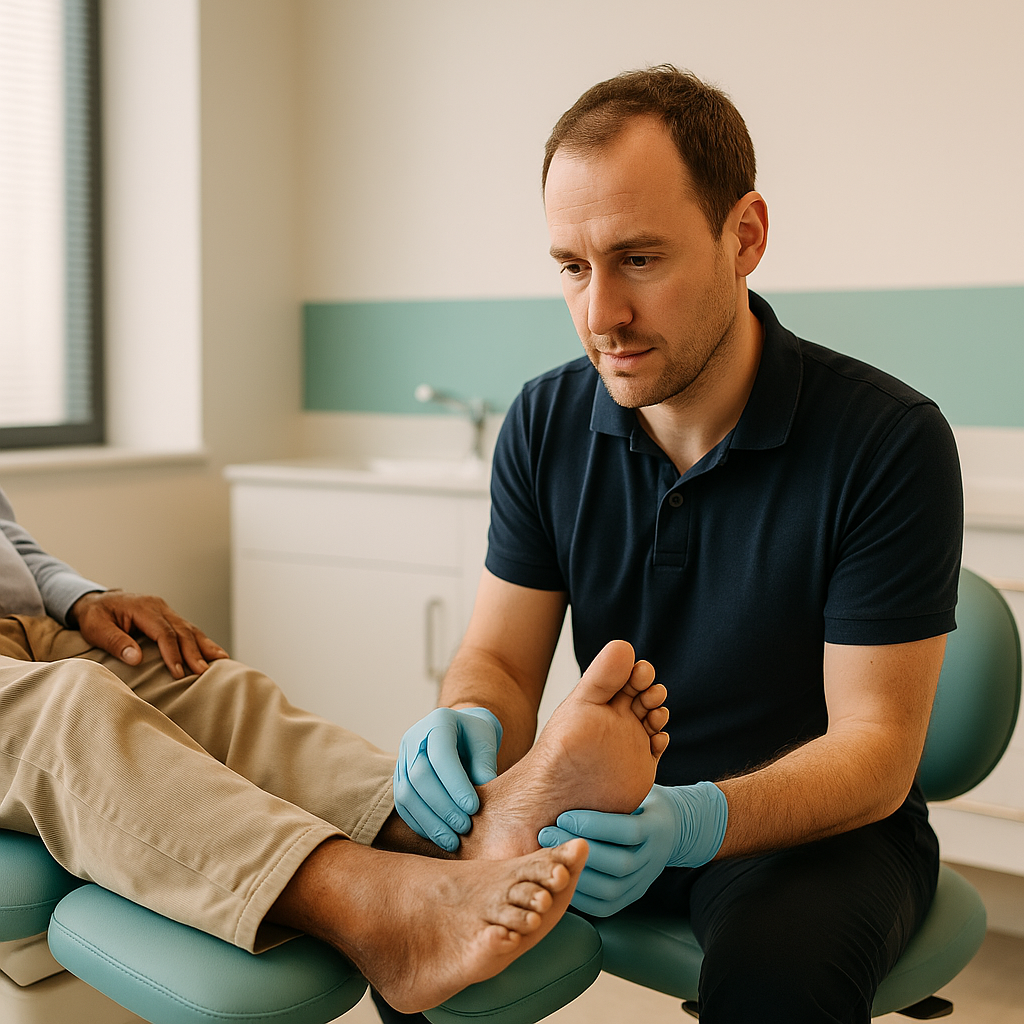
With World Diabetes Day coming up on the 14th of November, we thought it would be important to raise awareness about the link between Diabetes and Foot health and how important it is to check your feet daily and to monitor your diabetes and dietary intake.
One might wonder what foot cheese and sugar has in common…
These are two intertwined topics that co-exist together, whilst it is not clearly apparent why they do but further understanding of the disease process Is required to uncover the links between them.
What is diabetes?
Firstly, what is diabetes, diabetes is a condition were the body does not produce enough insulin or the insulin that is produced is not up to the required standard for its function.
Insulin primary function is to decrease the blood glucose levels.
There are different forms of diabetes, but most seen form is, type one and type two. Type one diabetes is when the body does not produce enough insulin due to an autoimmune process that cause a destruction of the β-cells of the pancreas, usually leading to the development of absolute insulin deficiency. Type two diabetes occurs when the body becomes resistant to insulin due to a lower quality insulin being produced cannot unlock the target receptors. The depletion of insulin stores can also be a cause of type 2 diabetes.
What is the link between diabetes and foot health?

For those wondering what the link between diabetes and foot health is, I will explain here. Diabetes affects multiorgan system in particular the cardiovascular system and the neurological system. For those of you that are diabetic and are not having a regular blood glucose level checked, it imperative for you to know what your HbA1c level (big bloods) is over 3months to see if you are controlling your diabetes adequately.
Uncontrol diabetes effects the small vessels which are responsible for delivering nutrients to the nerves that allow us to feel things without seeing them, if these small vessels become block or the pathway become different, the nerves can no longer receive the required nutrients to help it function and over time it dies off, a collection of nerves dying leads to sensory neuropathy which is loss of sensation.
As well sensory neuropathy, the small vessels provide nutrients i.e. urea to the skin to help it recover and replenish any moisture loss throughout the day, without urea the skin becomes very dry and being to crack, which in turn leads to diabetic foot ulcers and if you have sensory neuropathy as a bonus the risk of infection and possible amputation increase exponentially.
Take home message
The take home message from this blog is to make sure you check your feet daily, moisturise at least once a day and to monitor your diabetes and dietary intake. Remember your feet are your sole-mates, so look after them.
If you have any questions or concerns, or if you would like to see one of our foot health practitioners, book an appointment here, we would love to see you!
About Dr. Abdul Conrade
Dr. Abdul Conrade is a practitioner at b2 Chalfont Clinic with extensive experience helping patients achieve optimal health through evidence-based care.
View Full ProfileReady to Start Your Health Journey?
Book a free 10-minute consultation to discuss your concerns
Book Your Consultation