Bouldering is an exhilarating sport that has enriched my life for the better part of a year and a half. It challenges climbers to navigate intricate routes requiring strength, flexibility, balance, and coordination. Along my bouldering journey, I have experienced both rewards and setbacks, and this is my account of how osteopathy was effective in keeping me on the wall.
Every climber knows that this sport can be hard on the body due to falls, overtraining, and musculoskeletal injuries. Musculoskeletal injuries are dysfunctions that affect the bones, joints, muscles, ligaments, and tendons. The most common sites of injury include the shoulder, elbow, hand/wrist, and back, all of which can be caused by overuse, improper technique, and trauma.

After a year of training 3-5 times per week, I developed "tennis elbow," a very common tendon injury on the outer side of the elbow. It started off as mild discomfort that I brushed off as muscular aches from strength training, but it soon became progressively painful. Daily tasks at my osteopathic practice became increasingly difficult, and I would experience pain at night. Simple tasks like filling the kettle with water became a struggle. If you get injured, the most effective cure is to rest and avoid climbing. But if you know a climber's mentality and the deep desire for bouldering, you know that's often not an option. Nevertheless, I had to remember my osteopathic roots and seek manual therapy to relieve my symptoms.

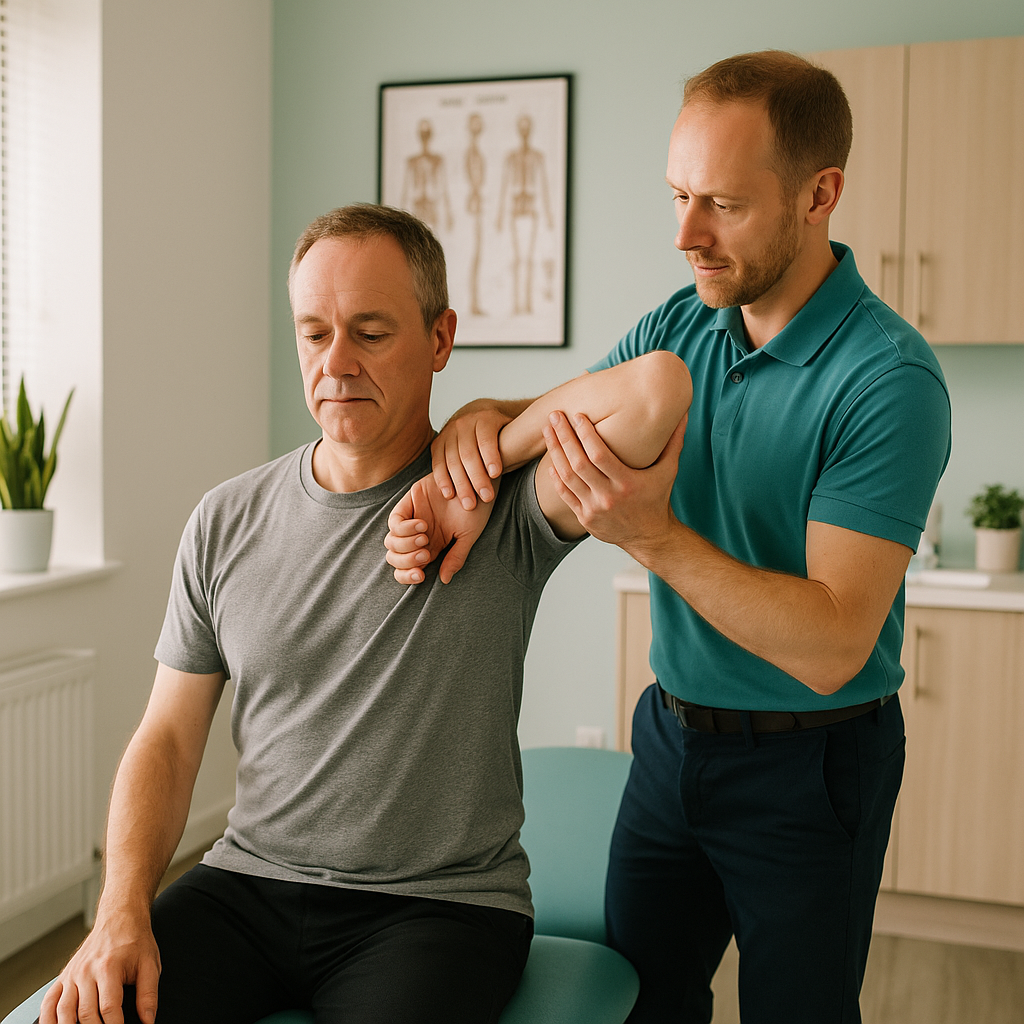
My fellow osteopathic colleague used a hands-on approach to diagnose and treat my tendon injury. They were able to use osteopathic techniques to help reduce inflammation and pain, improve range of motion, and encourage my body’s capacity for self-healing. Outside of the appointments, I was committed to my rehabilitation exercise program, and since I’m qualified in dry needling, I was able to use medical acupuncture on myself to further promote tissue healing.

My experience with osteopathy taught me to listen to my body rather than push through pain, as it can develop into something more serious.
I’m glad that osteopathy helped me recover from my injury so I could get back to the sport I love. I will continue to go back for maintenance appointments to ensure that I can keep climbing to the best of my ability.
If you want to book a maintenance appointment or to have a consultation with one of our practitioners, head over to our booking page here and book your appointment. We would love to see you!
About Thomas Barreto
Thomas Barreto is a practitioner at b2 Chalfont Clinic with extensive experience helping patients achieve optimal health through evidence-based care.
View Full ProfileReady to Start Your Health Journey?
Book a free 10-minute consultation to discuss your concerns
Book Your Consultation